
Top tips to keep your bike secure
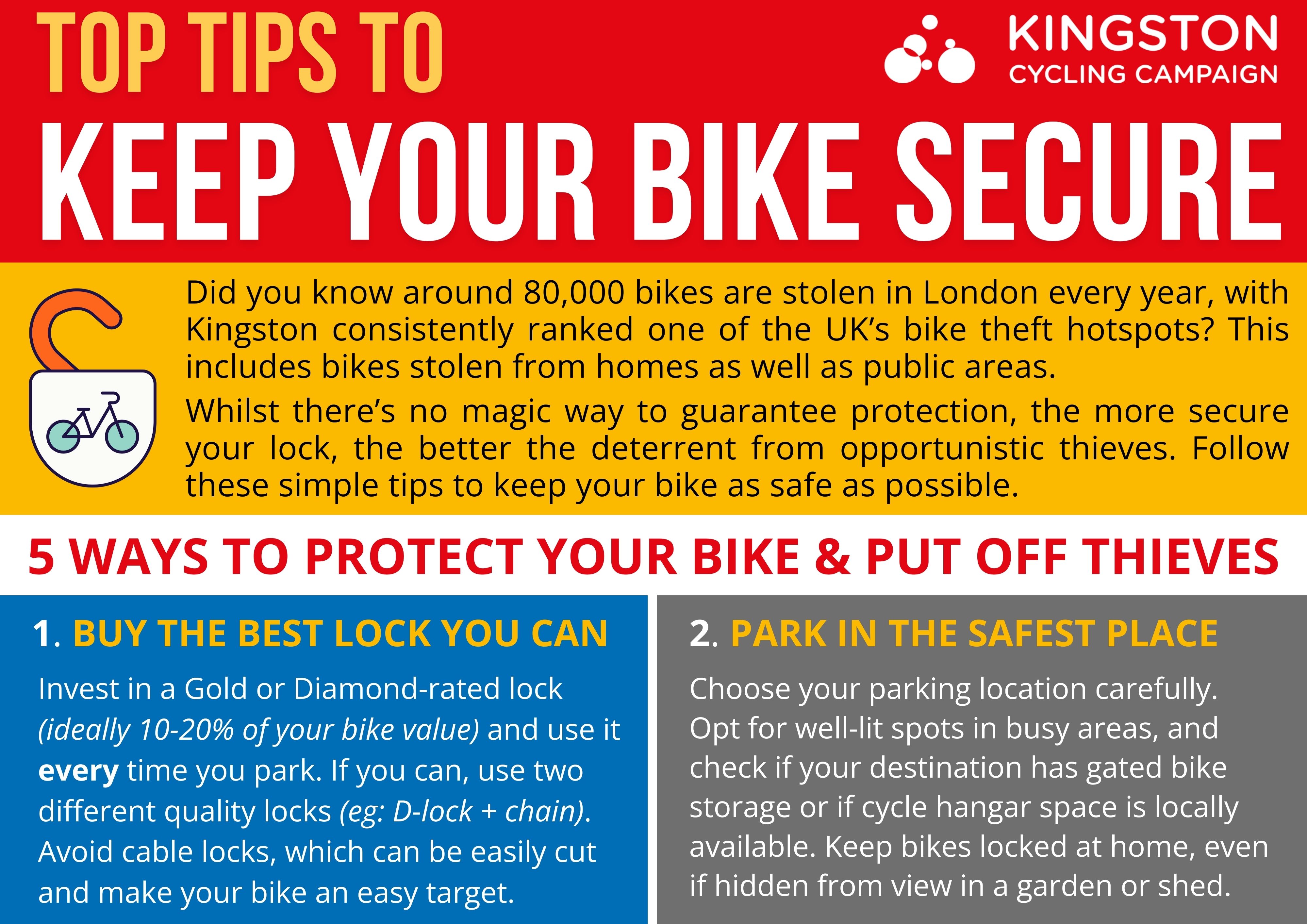
Did you know an estimated 80,000 bikes are stolen in London every year, with Kingston consistently ranked as one of the country’s bike theft hotspots? Sadly, this includes homes as well as public areas.
Having your bike stolen is upsetting as well as inconvenient. Whilst no lock can guarantee protection, the more secure it is, the better the deterrent from opportunistic thieves. Below we’ve summarised some of the key ways to put off opportunistic thieves and help keep your bike safe.
1) LOCK CHOICE: Buy the best you can afford
- Invest: It’s cheaper to buy a decent lock and use it every time you park up than replace your bike. The rule of thumb is to spend 10-20% of your bike value on a lock,
- Go for Gold: We recommend locks rated as Sold Secure ‘Gold’, or stronger Diamond-rated locks (designed to withstand attacks for longer – even from an angle grinder) for more valuable bikes
- Double your security: If weight isn’t an issue, consider using two quality locks – ideally two different types (eg: D-lock and chain) that require different tools to cut and will slow thieves down.
TOP TIP: Avoid cable locks, which are quick to snip through with wire cutters & make you an easy target
2) LOCATION LOCATION LOCATION: Choose a safe place to park
- Be seen: Avoid high-risk / isolated areas and opt for well-lit spots in busy areas near buildings / people / CCTV to park.
- Seek out securer areas: If you regularly use a station with a secure, sheltered bike storage area (eg: Surbiton and Norbiton) ask at the ticket office on how you might get access.
- Safe on-street parking: Some offices may have gated bike areas or nearby bike hangars for extra safety. More info on how to apply for a cycle hangar space or request one near you here.
TOP TIP: Bikes should be locked at home too, even if hidden from view in a back garden, shed or garage.
3) LOCK THE LOT: Secure frame and wheels
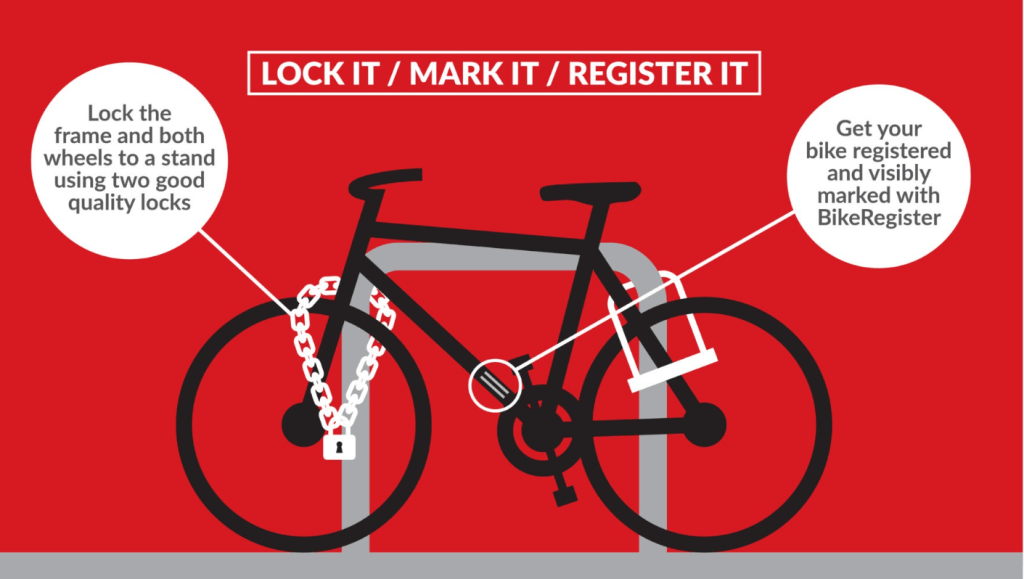
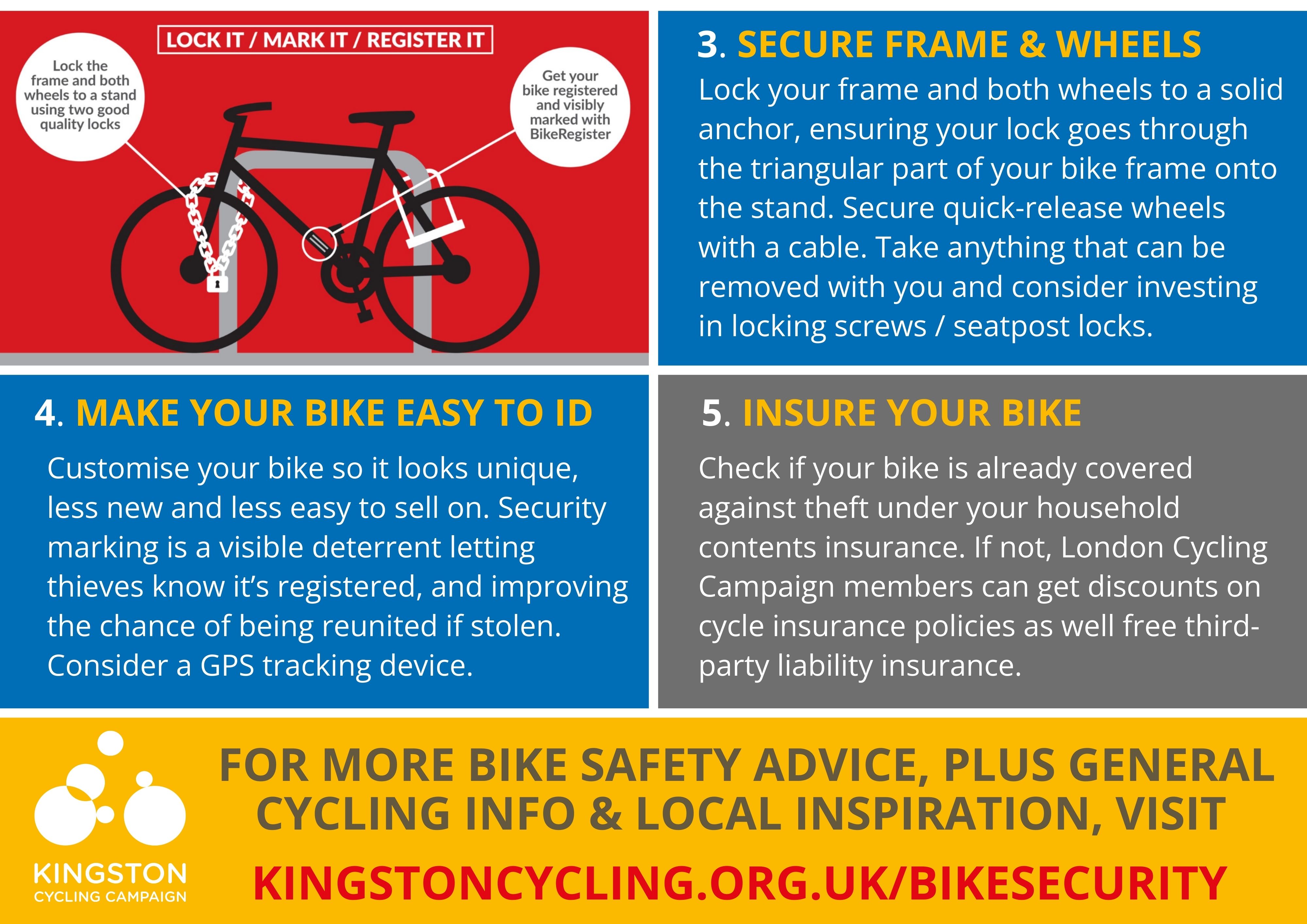
- Solid as a rock: Lock your frame and both wheels to a solid anchor, checking the pole / sign / railing / stand you’re parking against isn’t wobbly and can’t be pulled out.
- Avoid wiggle room: Park your bike as close to the stand as possible, ensuring your lock goes through the triangular part of your bike frame onto the stand. The less your lock can be moved, the harder it is for a thief to get their bolt cutters around them.
- Optional security extras: If your bike has quick release wheels, an extender cable can be useful to secure them both if they don’t fit within your D-lock. Alternatively, invest in locking screws, anti-theft bolts or seatpost locks to deter passing thieves.
TOP TIP: Take anything that can be removed (eg: lights, panniers) with you.
4) WHAT THIEVES LOOK FOR: Make your bike easy to identify
- This old thing? While all types of bikes get stolen, the newer the look, the easier your bike will be to sell on, with mountain bikes, valuable bikes, electric bikes and Brompton particular targets. Customise your bike so it looks unique and not box fresh.
- Police bike marking: Getting your bike security marked is an effective visible deterrent that lets thieves know the owner is registered, ensuring (if recovered) you have a better chance of being reunited. Find your next nearest bike marking session on the Kingston Council & Bike Register sites.
- Consider a tracker: A well-hidden GPS tracking device can alert you if the bike is being tampered with and increase the chances of locating it if stolen.
TOP TIP: A photo, proof of purchase and frame number will help police trace a stolen bike
5) GET INSURED: Because no lock is invincible
- Check if you’re already insured: Your bike might already be covered against theft under an existing policy, such as household contents insurance. But it’s worth checking whether they stipulate anything such as lock type or locations they’ll cover you for.
- London Cycling Campaign member benefits: In addition to free third-party liability insurance (which doesn’t cover theft or damage), LCC membership includes a 20% discount on Yellow Jersey cycle insurance policies, rising to 30% on renewal and a 60% multi-bike household discount.
TOP TIP: Join LCC as a new member & choose between an ABUS Ultimate U-Lock & cable, CatEye lights or a Lezyne Pressure Drive Pump as a free welcome gift
Lots more handy advice about how to prevent your bike from being stolen on the London Cycling Campaign website
 Kingston Cycling Campaign